Scraping Away the Mystery of Mold

My home institution's battle with Mucor mold infections is thankfully largely over and they are again safely transplanting organs into some of the sickest individuals in the world. The results of the CDC's investigation of the entire episode, which amounted to 4 infections (which may not even be more than would be expected in this type of patient population), are beginning to emerge and an important preliminary finding has been released.

According to press reports the 4 patients differed in their mode of acquisition of the mold. This is a noteworthy finding because it confirms that there was no point source for all the cases such as linens or bandages (previously linked to hospital-based Mucor cases).  It has been reported that 2 cases were inhalational, one was disseminated, and one was inoculated via the skin. As I have said on numerous occasions, mold is abundant in the environment and only poses a health risk to those that are immunocompromised. People can contract mold infections by inhaling spores, having the mold directly inoculated into a skin break, ingesting it (some outbreaks have been tied to contaminated infant feeding solutions), and injecting it into their veins. That these patient had differing modes of acquisition doesn't bear on the ultimate environmental source of the mold in the hospital, an important aspect of the investigation results yet to come.

I am currently attending a national infectious disease meeting and have listened to several lectures on mold rates in major hospitals and it is even more clear to me now that these 4 cases, though regrettable, are within the normal ranges to be expected at a major transplant center (despite what trial lawyers and rabble-rousers may believe). That my institution went through a Herculean process and basically had portions of their transplant list poached by a rival and declined organs during their unprecedented voluntary shut down, speaks to the high standards adhered to.


Station Eleven: Just Surviving a Cataclysmic Plague is Insufficient

Post-apocalyptic scenarios in which the world must recover from some catastrophic event are not new. Often, the catastrophic event is a massive infectious disease of some sort. What I find most interesting about this genre of fiction is what the author choses to place their selective focus on (because the nature of the cataclysm is of relatively little importance). 

Emily St. John Mandel's Station Eleven, which I read after seeing a recommendation by renowned HIV physician Paul Sax, is one such book that has attracted much attention. 

Set in a world emerging from the ravages of a recent pandemic of influenza--"The Georgia Flu"--Station Eleven weaves together past and present as seen through the experiences of several characters who were all connected to each other pre-pandemic. 

The pandemic, which was said to kill at an unfathomable and unrealistic rate of 99% with an equally implausible few hours of incubation, basically brought the world to a halt literally transforming all modern technology into relics for a museum.

What I find to be the best aspect of the novel is its portrayal of how various members of society respond to such a cataclysm. Do they carry on clinging to any remnant of society, descend into depression, hold out hope for a rebirth of civilization, become mindless acolytes to a "prophet", or go on living? What activities are important in such a society and which are superfluous? All of these facets of post-disaster life are important factors that actually have real-world counterparts and likely occurred in microcosm after major earthquakes, various tsunamis, as well as the West African Ebola outbreak.

The answers given to these questions, as exemplified by the characters in the novel, are, at once, both surprising and reassuring. In short, the book concretizes why, for humans, mere "survival is insufficient".


The Unborrowed Vision of Stanley Prusiner

It is a rare treat to get a glimpse into the unrelenting pursuit of truth by a genius. Nobel laureate Dr. Stanley Prusiner, in his biography Madness and Memory: The Discovery of Prion—A New Biological Principle of Disease, provides such a glimpse.

The book recounts Dr. Prusiner’s painstaking struggle to uncover the secrets behind such diseases as scrapie, kuru, Creutzfeld-Jakob Disease, and Mad Cow Disease, which, before his intellectual power was brought to bear on the problem, defied explanation. This chasm in scientific knowledge and the inability to isolate a traditional infectious agent from patients caused scientists to invent tortured concepts like “slow virus” and “unconventional virus.”

The book provides a detailed accounting of the mountains of evidence and data Dr. Prusiner and his associates amassed over decades of work, the inductive leaps that they justifiably made, and the converging evidence that a new infectious agent had been discovered necessitating the creation of a new concept, perfectly designated by the word “prion.”

A prion, or proteinacious infectious particle, unlike all other infecting agents, is exclusively comprised of protein and is devoid of any genetic material yet is able to replicate and cause illness.

While it may seem that Dr. Prusiner proceeding down a relatively straightforward path without many obstacles to surmount, it is far from the truth. It is almost a general, but unfortunate, principle that those who bestow new knowledge on mankind are not greeting with the fanfare that they deserve, but derision, ad hominem attacks, and persecution. Such was clearly the case with Dr. Prusiner and his unborrowed vision that propelled science and human understanding further. As Dr. Prusiner traversed the incalculable distance of an “odyssey” from “heresy to orthodoxy,” he was met with skeptics that ranged from scientific journalists to Nobel-prize winning scientists. (As a student in a virology class I vividly recall my professor expressing open skepticism). But, despite the opposition, Dr. Prusiner’s persisted. He importantly identified that “distorting my understanding to fit other people’s desires was dangerous” and that “for a scientist, the most important trait is intellectual honesty within himself.”

The story of Dr. Prusiner, who eventually was awarded with a well-deserved Nobel Prize in 1997 is instructive and inspirational. It is instructive in that it concretizes how a dogged pursuit of the truth no matter where it led and what scientific dogma it ran contrary to led to an unprecedented breakthrough that caused textbooks to be rewritten. It is inspirational in that it shows how such determination, integrity, and productivity are virtues and lead to the achievement of values.

The best treat of this book is the ability to hear directly from a genius exquisitely conscious of the intellectual process that he exemplified. His description of the Nobel Prize as “a celebration of civilization, of mankind, and of what makes human unique—that is, their intellect, from which springs creativity” perfectly captures how I evaluate this book thatI recommend in the highest possible terms.

Visions and Revisions: A Scintillating Glimpse of HIV's Early Days

"How many sexual partners have you had?" I asked the 20-something male patient who was seeing me in clinic for oral syphilis. 

"This week? This month? This year?" he replied. 

When I said "this year" -- since I had to pick something -- he gave me a relatively large number. 

"Are you jealous?" were the next words out of his mouth.

Clearly, I was ill equipped for this exchange which left me a little puzzled. A new book, however, provides some important context that I did not yet have a full grasp of when the above encounter (now 5+ years old) occurred.

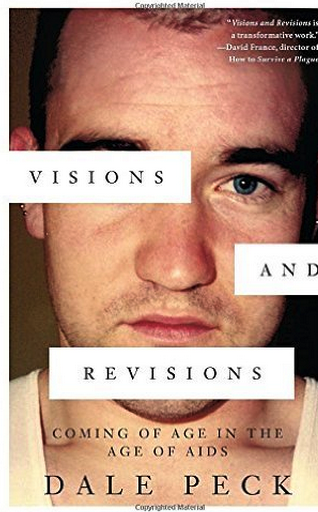
Dale Peck's Visions and Revisions: Coming of Age in the Age of AIDS provides a vivid whirlwind 1st person tour of the early HIV years from the perspective of someone immersed in the culture of bath houses, sex clubs, and navigating a world in which a killer the virus was lurking everywhere. As Scott Kramer's review in Metrosource noted, the book is akin to reading Peck's diary -- with all the lurid details no one ever found in their older sister's version. 

Peck, as a journalist in the early 1990s also reporting on serial killings of gays, freely switches contexts from a killer virus to a killer human allowing the reader to concretize the dual threats Peck was facing at the time. His analysis of serial killer Jeffrey Dahmer definitely brings a new level of insight and understanding of his victims and the patterns of their murders.

The book provides a unique bird's eye view into how one man coped with stigma and fear in the early days of a pandemic that still rages. As more and more people--infectious disease physicians included--have dimmer recollections of the horrible march of HIV in 1980 and 1990s America, immersing oneself in the early days of the plague with a colorful tour guide becomes increasingly more important.


Life Changing Medicine: More Than a Slogan & Tougher than Mold

As I write this, the institution I work for is in the midst of a comprehensive investigation into a small outbreak of mucormycosis in transplant patients. The discovery of these often deadly infections--triggered by the astute mind of a critical care physician--led to rapid action to safeguard patients on the part of the hospital. 

My institution is not just any transplant hospital--it is arguably THE most storied, most innovative, and most aggressive transplant institution on the planet performing nearly 400 transplants a year, including the rarely obtainable small bowel transplant. In short, pathbreaking work in transplantation has occurred here for decades and the human race is better off because of it. For example, transplant candidates that have no where left to turn come to Pittsburgh and are successfully transplanted. From pioneering work transplanting livers into HIV+ patients to transplantation of lungs into cystic fibrosis patients infected with a particularly nasty bacteria, my institution breaks the mold (no pun intended)--much like the city in which it is located in has.

This unfortunate and tragic outbreak has prompted the hospital to take many bold and unprecedented steps that include closing a major ICU, literally breaking down walls, a voluntary halting of transplantation, changing anti-fungal prophylactic guidelines, leaving no etiologic stone unturned, hiring world renown experts to join our own world experts, and even creating a blog to provide a level of transparency and public communication rarely seen.

These actions speak to the integrity and honor of the system and its leadership, whom I have extreme confidence in.

To me (and any intellectually honest observer), this is indisputable. 

This leads me to discuss another facet of my institution: the unjust persecution it continually faces from the state government, the press, unions, and many other parties.

For years, the health system has been locked in a battle with the state government which has sought to interfere--time and again--with its business practices. It has been damned for the very practices that have made it immensely successful, a boon for the economy of the state, and a destination for patients from all over the world. 

Just a few examples of the state's dictatorial meddling should suffice to sketch out a picture that shows the state's snarling attitude toward value creation. In recent months, the state government blocked the merger with an ailing hospital that has been forced to curtail services because it so desperately needs rescuing. The state would rather see a hospital continue to ail rather than be healed by merger. Additionally, the state has forced the health system to enter into absurd agreements with a direct competitor--a matter that the state Supreme Court has now taken up. The current executive branch of the state's attacks are so blatant that no less than the leader of the state senate called the governor biased against the system. These and many other actions and statements are nothing short of  a nihilistic desire to destroy the system on behalf of a power-lusting executive branch of the state government. It may attempt to hide its vicious motives behind platitudes regarding "consumer protection," as voiced by our state secretary of health, but their intentions are clear. I have spoken out against this envy-laden attack by the state many times and will continue to do so (despite bullying and even a piece of rotting meat sent to my doorstep).

The fact remains that no matter how much the governor and his cabinet seek to bully the health system and its employees, they cannot change the facts of reality. These facts unequivocally demonstrate the prowess of this system in delivering care, fostering innovation, and providing nothing short of life changing medicine. 

Getting this transplantation program back on line safely is not just a priority for the region, but the world. I am completely confident it will happen as soon as is possible.