
RFK Jr's Anti-Vaccine Camelot: Giving More Horsepower to The 4th Horseman of the Apocalypse

President-elect Trump's supposed appointment of Robert F. Kennedy Jr. to head a "vaccine safety" commission is alarming on many different levels for myriad reasons. (For the record, the Trump transition has not confirmed the formation of this committee but the interview RFK Jr did with Science post-meeting is pretty suggestive). 

RFK, Jr. is known, not for the Kennedy mystique, but as someone who unrelentingly spreads anti-vaccine mythology. He is most associated with his vociferous opposition to thimerosal, the innocuous mercury-based preservative used in some vaccines. Because of his last name, he is given an outsized platform to promote his irrational views, notably Rolling Stone and The Daily Show. Now that platform has metastasized and risks derailing the precarious progress the human race has made in the fight against infectious disease. 

A vaccine "safety commission" led by someone whose primary involvement in vaccines does not involve the actual study of vaccines, the administration of vaccines, or the development of vaccine is puzzling on its face. When that person's primary role with vaccines is to foment doubt on the biotechnological marvel of vaccination is even too far-fetched a scenario to call Orwellian, it is the height of absurdity. Yet, that is what we have devolved to.

But what could be the deeper purpose of this action? What does it accomplish? The president has no direct control over which vaccines groups such as the American Academy of Pediatrics recommend or which vaccines schools require as a condition of enrollment. Thus, this commission is a farce with no real jurisdiction. So the only purpose, in my estimation, of this ludicrous action is to reward and pander to the anti-vaccine movement by giving them a quasi-official standing and the explicit acknowledgment that they have a "friend" in The White House who gave one of their most prominent spokespersons an official sanction. 

Such a "commission", with the support of the President, can, however, wreak havoc. For example, I anticipate RFK Jr. will interfere with state or local vaccine campaigns (as he has done before), will spread disinformation and propaganda (as he has done before), and will amplify all sorts of anti-scientific arbitrary blathering against vaccines (as he has done before). 

The value of vaccines are self-evident given the immeasurable successes they have achieved. Vaccines have transformed childhood from a period in which friends succumbed to infections into one of idyllic joy with their protection against 16 (!!) childhood infections. Vaccines have rid the planet of smallpox under DA Henderson's able hand. Vaccines have relegated polio to just two countries. Vaccines against HPV and hepatitis B have and will seriously diminish the incidence of various cancers (cervical, vaginal, vulvar, penile, head/neck, and liver).

The doctors President Obama mentioned in his farewell address that stop "pandemics in their tracks" have achieved these pathbreaking feats almost exclusively through vaccines. Right now scientists are working on a slew of vaccines that will stop future pandemics as well as halt the spread of endemic infectious diseases in their tracks and allow civilization to progress. While the President-elect and RFK Jr. may say they are "pro-vaccine" their habitual sowing of doubts about vaccine safety and questioning the number of recommended vaccines belies their true positions.

The level of evasion required to deny the efficacy of vaccines is, to me, pathological and to reward or embrace that level of mental dysfunction is tantamount to surrendering one's own mind. The twisted illogic of RFK Jr. has caused him to liken the impact of vaccines, which have saved hundreds of millions of lives, to the Holocaust.

This attitude towards vaccines is nothing short of the return of the primitive and represents the nihilistic worship, not of technological progress and the genius of Jenner and Pasteur, but of the misery, death, and pestilence that vaccines delivered us from. A harbinger worth contemplating as these forces work to make America pestilential again.

 

Taking Candy From Strangers or Antibiotics from Injudicious Urgent Care Prescribers

One of my maxims when it comes to antibiotic stewardship is that stand-alone urgent care centers, those unaffiliated with a hospital, engage in a race-to-the-bottom to see just how inappropriate their antibiotic use can be. In an environment where patient "satisfaction" (and not patient clinical outcomes) becomes the currency, any action that pleases the "customer" and results in a repeat visit or goodwill is valued over those that do not have those attributes--irrespective of the veracity of the scientific and medical principles behind it. 

Walking out of an urgent care center with a prescription for antibiotics has become the new lollipop and is often treated that way by the providers who think of these resources as a parting gift, rather than a scientific achievement that is crucial to civilization. 

I am writing about this today because one of my friends -- a highly intelligent, assertive, and infectiously snarky nurse with an advanced degree -- related an experience she recently had with the dominant stand-alone urgent care provider in the Pittsburgh area. My friend had symptoms of an upper respiratory infection and, because of her knowledge coupled to a need to be around an immunosuppressed individual, she sought to find out if she was suffering from influenza, might benefit from antiviral treatment, and possibly need to limit her exposure to the immunosuppressed person for fear of passing the infection. Needless to say, her test (which was likely the poorly sensitive rapid influenza test that has vanishingly few uses in light of the arrival of recent CLIA-waived PCR influenza tests that everyone should be using) was negative and, instead of counseling her regarding the limitations of the test and the likelihood with high influenza circulation rates in the area she likely had influenza, an antibiotic was offered. My friend predictably balked at this, and as is her style, drew the physician out and got him to skewer science and push an antibiotic on her (which she refused) because of what he deemed the rate of secondary bacterial infection. His reply to her protestations is even more scarier than the injudicious use of antibiotics he advocated: "I teach this stuff." Suffice it say, she recovered and took no antibiotics.

We have a long way to go to properly steward antibiotics and not all patients are as astute as my friend. I realize that I am painting with too broad a brush and there is likely a lot of appropriate prescribing going on in urgent care centers. Additionally, hospital-based providers are in no way immune from injudicious prescribing either. However,  placing "patient satisfaction" above justified clinical care in a "have it your way" Burger King healthcare culture, exemplified by many urgent care centers, is something that needs addressing. 

That last part about Burger King was probably unfair....to Burger King, which practices judicious antibiotic use as it has ceased serving antibiotic-laden chicken.


The Real Axis Powers: The Brain, The Gut, and The Microbiota

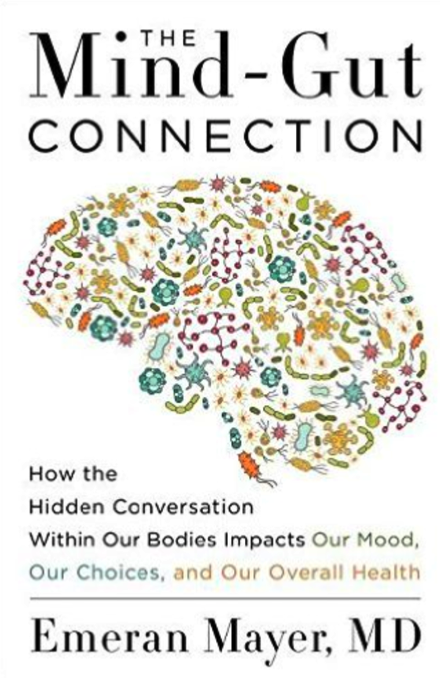
The last few years have seen a plethora of books published on the microbiome and the related topic of the influence of how the gastrointestinal (GI) milieu has implication that reach far beyond one organ system. I recently finished another book in this genre, The Mind Gut Connection: How the Hidden Conversation Within Our Bodies Impacts Our Mood, Our Choices, and Our Overall Health by UCLA gastroenterologist and professor and Dr. Emeran Mayer MD, PhD. The focus and theme of this valuable book is on the intricate relationships the enteric nervous system (ENS) has with the brain and how alterations in this second brain are increasingly being linked to myriad conditions. 

While the ENS gets much less attention than the brain and spinal cord, which together comprise the central nervous system (CNS), it is no less important and Dr. Mayer's book concretizes this fact in countless ways. Beginning with hypotheses regarding the signaling molecules that evolved between ancient bacterial species, when they were the only organisms to "talk" to on the planet, Dr. Mayer moves to the multicellular but tiny marine creature, the hydra, which is described as "a floating digestive tract". Eventually organism like the hydra were colonized with bacterial species and a symbiotic relationship evolved. Fast forward to our gut, minutely wired with nerves and teeming with neurotransmitters like serotonin, and you can understand how this system developed. As Mayer argues, as the primary brain evolved and  the role of the secondary brain was relegated to the GI tract with an important connection between the two via the vagus nerve which allows constant communication and feedback. The microbes in the gut are a vital component of this system as well as their metabolites directly interact with the ENS and, consequently the brain. 

To put it simply, there's a clear physiological and evolutionary reason why one gets diarrhea when nervous as a full bowel may not be the best thing to have when facing an important stressor like a lion (or the SAT exam). Taking this simple example and expanding it to reveal how perturbations in this system can lead to real pathology has led to major insight into diseases as disparate as celiac and Parkinson's disease.

There are many fascinating aspects of this book including historical observations (via a gastric fistula) made on how various emotions influence digestion rates, the role of inflammatory foods, and how psychosocial stressors (particularly early in life) can leave their mark on the gut-brain-microbiota axis. This book stands out in this ever growing field as one that provides a lot of seminal information about the ENS and the microbes it interacts with in an easily accessible manner with an emphasis on explaining real world macro-phenomena and it is for that reason I highly recommend it. 


Viruses, DNA Cages, and Tigers, Oh My! A Review of Tiger Tiger

In a world in which daily headlines announce breathtaking advances in genetic engineering and synthetic biology that have the promise to eradicate disease and lengthen lifespans, it is not surprising -- and actually prudent -- that there efforts to understand how such technology could be misused. So called, dual use research of concern, is not something that is specific to biologic advances it applies to literally everything. Any technology can be misused from a drone to a fishing rod. However, it is the threat of bioterrorism coupled to rapid advances in biology that have motivated much concern and debate. Naturally, this debate has spilled into popular culture with a planned television show centered on the gene editing technology CRISPR in the works and several books, including a fiction thriller I just finished.

Tiger Tiger, the second novel in author Joann Mead's Underlying Crimes series of bio-thrillers, is the story of a biological attack on the United States and efforts to stop it. This attack is not accomplished using the usual suspects of anthrax, smallpox, plague, or botulism. It is accomplished using engineered influenza viruses -- inspired by the controversial influenza gain-of-function experiments -- for which there is no vaccine readily available. The perpetrator of the attack, an overtly nihilist philosophy professor, seeks out unscrupulous and disturbed scientist from whom to purchase these tiger influenza viruses which are derived from strains that had caused an outbreak in zoo tigers (something that has really happened). The delivery system for these viruses is no crop-duster by DNA molecular cages -- a major advance in nanomedicine.

The plot oscillates between the nefarious actors attempting to initiate their attack and the efforts of a secret group of government agents and other experts (the Partners)  to discover what is occurring after the first test infections are "successful". As they race to unravel the etiologies of these infections in order to stop them before a bigger wave of infection occurs, Mead emphasizes how open source intelligence gathering from social media, for example, can be harnessed in such endeavors as her namesake character run down various clues.

I enjoyed reading the book, less for its literary value (and multiple unusual sex scenes), than for its presentation of how a bioterrorism attack might look in the world of nanotechnology, CRISPR and synthetic biology. When it comes to these technologies, I view them as pathbreaking technologies with enormous value that far eclipses any potential downside from improper use -- which isn't as easy as it might seem in a novel, a movie, or a government report. I also enjoyed a science-driven plot that was not completely fantastical and well-informed by the actual issues, the science, and the technology of the day.

The theme of Tiger Tiger may be the relative ease with which a bioterrorist attack can be executed and the increasing realization of that fact by those who would seek to do harm -- something which almost everyone in my field would agree is true.


Cats Beware: Eating Tweety Bird May Be Hazardous to Your Health

Though buried among Christmas season headlines, the report of a veterinarian contracting an avian flu strain from a cat is, to me, highly significant. When people speak of avian influenza viruses it is the highly lethal H5N1 or H7N9 that are being discussed as these two viruses are high on many threat lists. 

In this incident, a New York City veterinarian caring for sick cats contracted the H7N2 virus which had not been known to infect cats before this event. It has been speculated the cat may have contracted it from a pigeon. It had been diagnosed in humans at least twice since 2002: once from someone involved in a Virginia avian outbreak and once before, interestingly, from a person in New York City without an unknown exposure. The veterinarian, like the two other human cases, recovered uneventfully and no secondary spread of this virus to other humans was detected via a robust surveillance operation conducted by the New York City Department of Health. 

This event, to those who track influenza, transcends the minor illness that results as it is an important example of how zoonotic flu viruses could take hold. These types of incursions into new species are important to study and the viral characteristics and changes that made such a jump possible should be compared to wild-type viruses that circulate in avian species. 

Influenza possesses many capacities that bestow it with the the capacity to cause cataclysmic (no pun intended) pandemics. Among these capacities, its ability to infect a variety of different types of animal species and shuffle viral genes inside them is probably the most valuable. Moving from birds to cats to humans is one such example. Indeed, the pandemic H1N1 virus has a complex genealogical origin that is a triple-reassortant virus that reassorted again. When a virus has a wide host range, it can take all sorts of turns and jumps some of which may lead to a human pandemic. These types of events can be predicted but the precision may not be perfect as our last pandemic emerged, not from China, but from Mexico.

While there has been a much needed focus on H5N1, we also know that H7 (H7N2, H7N3, H7N7, H7N9) flu viruses have an ability to jump into humans and, in the case of H7N9 cause severe disease. I wonder if the fact that multiple H7's have been making incursions into humans is a sign of what our next pandemic flu virus may be. Thus far, it appears the most prolific of these H7's, H7N9, has not changed substantially through its 4 waves of infection

While it appears that, fortunately, H7N2 does not lead to severe disease in humans this event should remind people of the prowess of flu viruses and the eternal vigilance needed to protect the human race from this extremely successful virus.